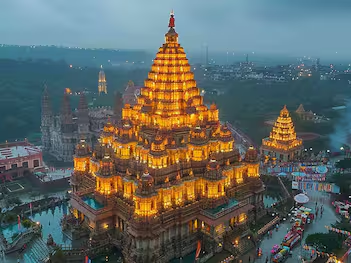
Odisha has played an important role in the growth and development of Jainism. It was a great center of Jainism even much before the birth of Vardhaman Mahavira. Under the royal patronage of King Karakandu and Kharavela, Jainism became the state religion of Kalinga. Mahavira himself is said to have preached Jainism in Kalinga. According to the Hathigumpha inscription, Kharavela claimed to have brought back the idol of Kalinga-Jina, which was taken away by a Nanda ruler of Magadha. Jainism flourished in Odisha up to the 12th century A.D., despite the rise of other religions such as Hinduism and Buddhism. It had an immense influence on the art and architecture of Odisha. A number of Jaina relics in the form of caves, temples, sculptures, and statues are found in different parts of the state, reflecting its rich cultural heritage. However, it was the 23rd Tirthankara, Parsvanath, who gave impetus to this tradition and carried out significant preaching in the 8th century BC. A king named Karakandu of Kalinga built Karakanda Vihar for the propagation of Jainism. It is also mentioned that the last and most famous of the 24 Jain Tirthankaras, Vardhaman Mahavira, visited Toshali, the ancient capital of Kalinga. Although Buddhism witnessed a renaissance under Emperor Ashoka, Jainism was equally revered. History also records the extensive patronage of Jainism by Kharavela of the Chedi dynasty in the 1st century BC. He developed low-roofed caves at Kumari Parvata—now known as Khandagiri and Udayagiri—on the outskirts of Bhubaneswar, for Jain monks to reside and meditate. The invaluable inscriptions inside these caves reveal many historical facts. They describe the rulers of the Chedi dynasty, also known as the Mahameghavahanas, who ruled Kalinga during the 1st century BC. Most of these caves originated during the reign of Kharavela, when Jainism was the state religion of Kalinga. The inscriptions also mention two other rulers of this dynasty, Kudeparisi and Vadukha, as donors. These records provide evidence of Kharavela’s ambitious career, including his conquests, temple construction, and the recovery of the Kalinga-Jina idol from the Nandas of Magadha, which he reinstalled on the hills. Even after the death of King Kharavela, Jainism continued to flourish under his successors. The Ganga and Sailodbhava dynasties also treated Jainism with great respect. This is further confirmed by numerous archaeological findings discovered across the state.
Upon arrival at Bhubaneswar Airport/Railway station, transfer to Puri & en-route visit to Pipilli (Applique work village),Sakhi Gopal Temple then check in hotel,evening visit to the12thcenturyworld famous Jagannath Temple (one of the four dhams,Only Hindus are allowed inside the premises of Jagannath temple,enjoy at golden beach. Amazing sceneries of sunrise & sun set, back to hotel & overnight at Puri.

Naren Palace

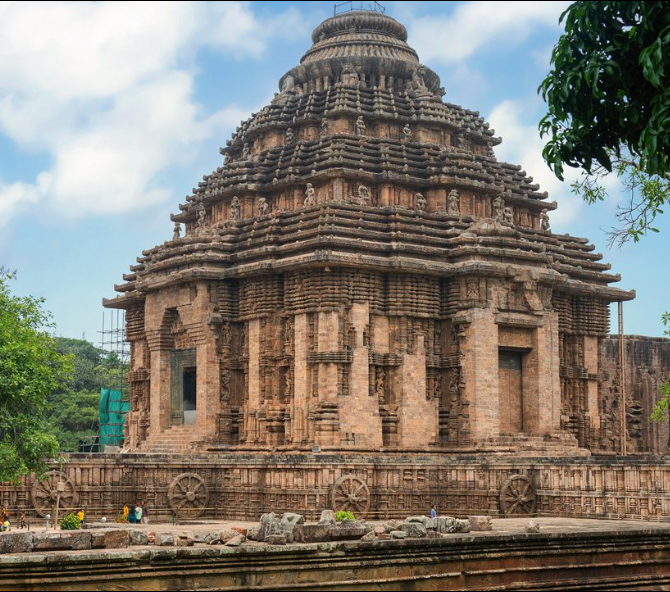
After breakfast proceed to Konark & en-route visit to Sudarshan Sand Art Museum, Ramchandi temple, Chandrabhaga beach cultural and traditional identity of Orissa,which is famous for its long stretch of goldens and bordered with casuarinas,Konark Museum,Sun temple(Thetemple was built byKing Narasimhadeo in the 13th century,it is counted among the 7 wonders of India, famous for world heritage site & also known as “Black
Pagoda” & Enjoy the Beautiful Light & SoundShow(Closed on Monday)and then back to Puri hotel & overnight stay at Puri.
-
-

- Breakfast
Included
-
Naren Palace
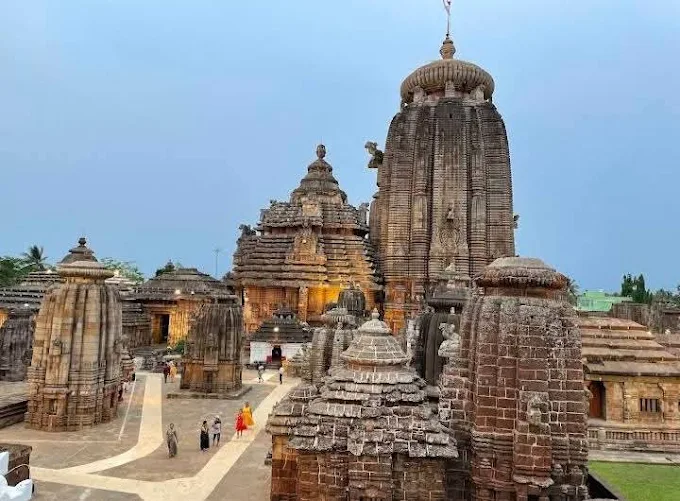
After breakfast, check out from the hotel and drive to Bhubaneswar. En route, visit Raghurajpur, a traditional arts and crafts village famous for its exquisite hand-painted works. Continue to Dhauli Hills, one of the most important Buddhist destinations in India. This is the place where Ashoka renounced violence and embraced Buddhism after witnessing the devastation of the Kalinga War. The site is also known for the Peace Pagoda. Proceed to visit the famous Lingaraj Temple, dedicated to Harihara (a combined form of Lord Shiva and Lord Vishnu). This 11th-century temple was built by King Jajati Keshari of the Somavanshi dynasty. Next, explore Mukteswar Temple, popularly known as the “Gem of Odisha Architecture” for its intricate carvings. After sightseeing, check in to the hotel and relax. Later, visit the Odisha State Museum (closed on Mondays) and Ram Mandir. Enjoy free time for shopping at Ekamra Haat, a popular marketplace for handicrafts and local products. Return to the hotel for an overnight stay in Bhubaneswar.
-
-
- Breakfast
Included
-
Sapphire plaza
After breakfast, visit the Digambara Jain Temple, located atop Khandagiri Hill. This sacred site is surrounded by a series of ancient rock-cut Jain caves, commissioned by Kharavela in the 1st century BCE. The caves are adorned with carvings and images of various Jain Tirthankaras, reflecting the rich Jain heritage of Odisha. Continue to the Parsvanath Jain Temple, located within the Digambara Jain Temple परिसर. This living temple is dedicated to Parsvanath and faces east. The sanctum houses a beautiful marble idol of Parsvanath, depicted in a standing posture under a serpent hood. The image is intricately flanked by sculptural panels and smaller figures of Jain meditators, showcasing fine craftsmanship and spiritual symbolism. After the visit, return to the hotel and relax. Later, after freshening up, proceed to visit the Rajarani Temple, an 11th-century temple known for its exquisite carvings and sculptural beauty. Next, visit the Parsurameswar Temple, one of the oldest temples in the city, renowned for its architectural and historical significance. Return to the hotel for an overnight stay in Bhubaneswar.
-
-
- Breakfast
Included
-
Sapphire plaza
After breakfast, drive to Cuttack and visit Dhabaleswar Temple (it is dedicated to the worship of Lord Shiva. The temple, located on an island on the Mahanadi River, is embellished with stone carvings that date back to the early 10th and 11th century. The serene ambiance in which the temple is situated inspires spiritual feeling), then visit Shri Swetambar Jain Murtipujak Tirth, Barabati Fort, Odisha State Maritime Museum (closed on Monday), then back to Bhubaneswar hotel and overnight stay at Bhubaneswar.
-
-
- Breakfast
Included
-
Sapphire plaza
-
Hotel accommodation is on twin sharing basis (unless specified differently) as per itinerary
-
Meals as per hotel plan
-
All transfers and sightseeing as per itinerary in vehicle on sharing basis
-
Road taxes, parking fees, fuel charges, interstate taxes and toll taxes
-
GST unless specifically mentioned in the rates
-
All personal expenses like tips, laundry, telephone calls, alcoholic beverages, camera/video fees at monuments, medical expenses, airport departure tax, etc.
-
Anything not mentioned under package inclusions.
-
Entrance fees at all monuments and sightseeing spots
-
No refund is available for No Sho
-
Cost incidental to any change in the itinerary/stay on account of flight cancellation delay due to bad weather or any other reason given by the airline ill health road blocks and/or any factors beyond reasonable control. No refund will be available for unutilized services.
- No refund for No Show at any service
-
Airfare if not mentioned in the itinerary
- Room allocation (Twin bed / Double bed) is at the discretion of the hotel.
- Standard check-in time is 1500 Hrs & check-out time is 1100 Hrs.
- Number of meals are always corresponding to the number of nights booked. Breakfast is not provided on the day of arrival.
- Early check-in and late check-out are subject to availablity. Extra charges if any, have to be settled directly by the guest.
- Either rollaway bed or mattress shall be provided for extra adult / child in hotels.
- Guests are requested to take care of their personal belongings and avoid leaving them unattended.
- Cost of additional services availed by the guest which are not part of our package have to be settled directly at the hotel.
- The hotels are suggested on the basis of feedback taken from our customers. Still we request you check hotel website and other sources for reviews. We will not be responsible for any deficiency of services by hotel.
- Suggested hotels are subject to availability at the time of booking. In case the same are not available, then the best Similar* category will be provided.
- Transfers and sightseeing tours are on SIC (seat in coach) / shared basis. Unless private transfers / tours are specifically mentioned.
- The vehicle used (A/C or Non A/C) is available for point to point services only and is not at disposal. Guests are requested to strictly follow the timings in the program.
- It is mandatory to carry age proof of children (02 to 11 yrs) and infant (below 02 yrs). Child above 11 years shall be considered an adult.
- Photo id of every person is mandatory for check-in.
- 50% advance to be paid at the time of booking.
- Air fare is calculated at the time of proposal creation and is subject to change at the time of actual booking.
- 100% payment is to be made for domestic packages before 14 days of departure date.
- 100% payment is to be made for international packages before 30 days of departure date.
- In case of cancellation, standard cancellation policy will be applicable unless specified differently
General Cancellation Policy:
- If cancellation is made any time not less than 45 days prior to departure, INR 5,000 (per person) shall be deducted.
- If cancellation is made 45 to 30 days prior to departure, 50% of the tour cost or INR 5,000 per person, which ever is higher shall be deducted.
- If cancellation is made 30 to 15 days prior to departure, 75% of the tour cost shall be deducted.
- If cancellation is made within 15 days prior to departure, total tour cost will be non-refundable
Note: Many bookings are non-refundable once booked. Be careful before making any reservations.